


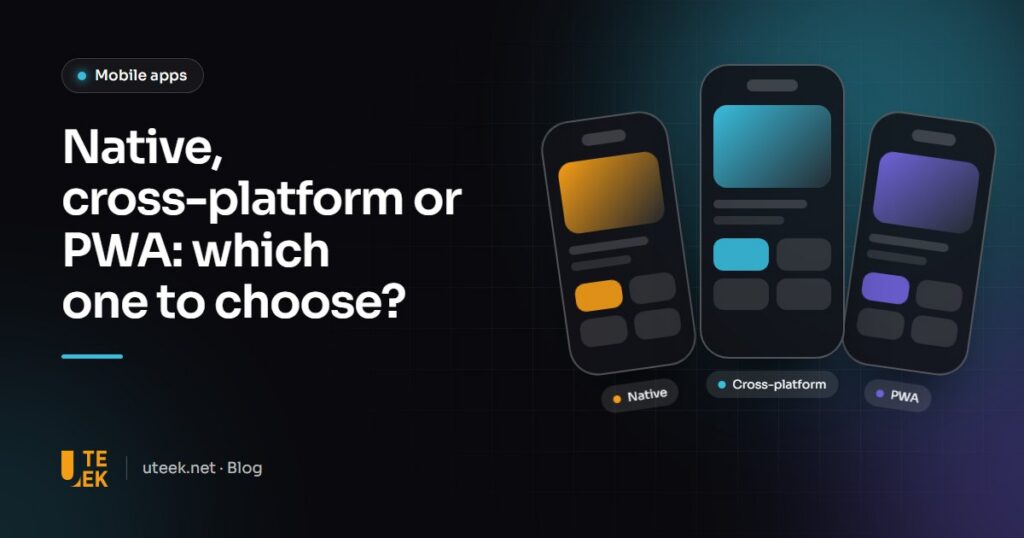
There is no single best mobile technology. A native app delivers top performance and full access to the device; a cross-platform app (Flutter, React Native) shares one codebase across iOS and Android; a PWA (Progressive Web App) is an installable website that is quick to launch and doesn’t have to go through the app stores. The right choice depends on your features, budget, timeline and distribution strategy.
Key takeaways
- Native: maximum performance and full hardware access, but two apps to build and maintain.
- Cross-platform: one shared codebase for iOS and Android, the best trade-off for most projects.
- PWA: the fastest and most affordable option, ideal for enhanced web use, an MVP or an internal tool.
- Decide based on your key features and distribution constraints, not on a technology trend.
The three approaches in one sentence
- Native: an app built specifically for each operating system, in Swift for iOS and Kotlin for Android.
- Cross-platform: a single codebase, written with Flutter (Dart) or React Native (JavaScript / TypeScript), compiled for iOS and Android.
- PWA: a web app that installs on the home screen, works offline thanks to a service worker and updates without going through the stores.
Comparison table
| Criterion | Native | Cross-platform | PWA |
|---|---|---|---|
| Codebases | Two (iOS + Android) | One | One (web) |
| Performance | Excellent | Very good | Good |
| Hardware access (Bluetooth, NFC, sensors) | Full | Very broad | Limited |
| App store publishing | Yes | Yes | Optional |
| Time to market | Longest | Medium | Shortest |
| Relative budget | Highest | Mid-range | Lowest |
| Updates | Through the stores | Through the stores | Instant |
| Push notifications | Yes | Yes | Yes, with limits on iOS |
| Google indexing | No | No | Yes |
When should you go native?
Native development makes sense when the app makes heavy use of the device: real-time video or audio processing, augmented reality, Bluetooth-connected devices, games or highly animated interfaces. It is also the benchmark when the user experience must be flawless on each platform and the budget allows you to maintain two apps.
When should you choose Flutter or React Native?
For the vast majority of business, e-commerce, booking and service apps, cross-platform offers the best value for money. A single team builds for iOS and Android, new features ship on both platforms at once, and performance is close to native. Flutter is known for consistent interfaces; React Native lets you reuse JavaScript web skills. Kotlin Multiplatform is a third option when you want to share business logic while keeping native interfaces.
When is a PWA enough?
A PWA is often the best entry point for an internal tool, a customer portal, a catalogue, digital signage or an MVP designed to test a market. It is accessible from a simple link, indexable by Google and updated instantly. Since iOS 16.4, PWAs added to an iPhone home screen can receive push notifications. This is the approach we chose for the Protrot PWA and digital signage project.
6 questions to ask before you decide
- Which device features are essential (camera, background GPS, Bluetooth, contactless payment)?
- Will users look for you on the App Store and Google Play, or arrive from your website?
- What is your launch deadline, and do you need an MVP to validate the market?
- What budget can you allocate to development, and then to yearly maintenance?
- Does the app need to work offline?
- Do you already have a web platform or an API the app can reuse?
What about the budget?
Cost depends mainly on the number of screens, the complexity of the features and the integrations involved (payments, ERP, back office). For the same scope, two native apps cost significantly more than one cross-platform app, which in turn costs more than a PWA. Don’t forget maintenance: every new iOS and Android release requires updates, testing and sometimes adjustments.
FAQ
Flutter or React Native: which should I choose?
Both are mature and used by major brands. Flutter offers a very consistent look across iOS and Android; React Native fits naturally into an existing JavaScript ecosystem. The choice mostly depends on your team’s skills and the libraries your project needs.
Can a PWA be published on the app stores?
Yes on Google Play, using a Trusted Web Activity. The App Store is more restrictive: Apple expects real added value compared with a website. If an App Store presence is essential, a cross-platform app is usually a better fit.
Can you start with a PWA and move to native later?
Yes, and it is an effective strategy: the PWA validates usage and demand, then a native or cross-platform app reuses the same API and back office. The design and feature work is not lost.
How long does it take to build a mobile app?
For a well-scoped MVP, allow three to six months from UX/UI design to store release in many cases. A feature-rich app with a back office and multiple integrations takes longer. A precise requirements document is the best way to make the schedule reliable.
Build your app with Uteek
From the Jobito recruitment app to e-commerce websites with companion mobile apps, Uteek designs and develops native, cross-platform and PWA mobile applications. We help you choose the right technology from the very first scoping workshop. Let’s talk about your app.
Related articles
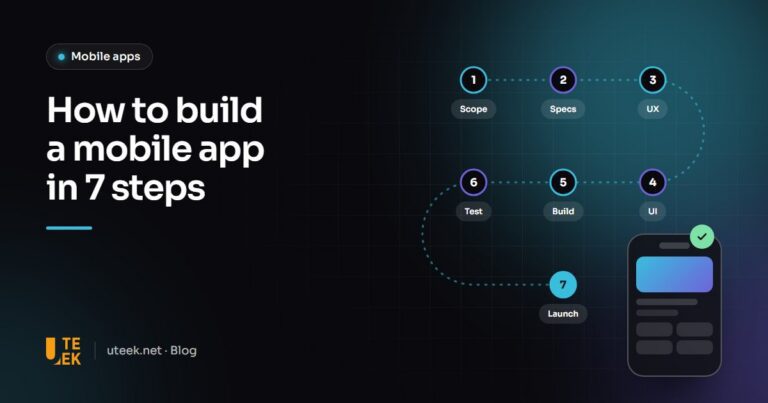
How to build a mobile app in 7 steps, from idea to app store launch
Scoping, UX, UI, development, testing, app store launch… The 7 steps to build a mobile app, with the…
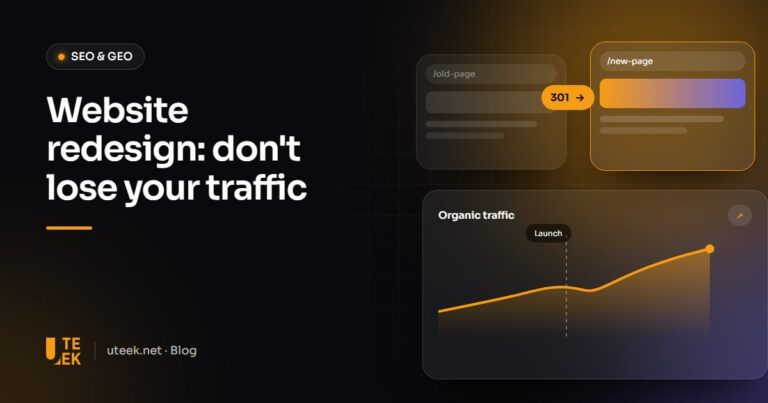
Website redesign: the SEO checklist to keep your traffic
A poorly prepared redesign can wipe out years of search visibility. Inventory, 301 redirects, testing and monitoring: the…
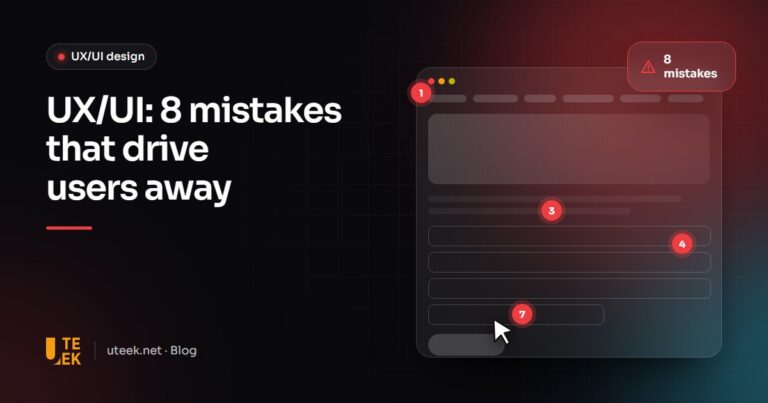
UX/UI design: 8 mistakes that drive users away (and how to fix them)
Confusing navigation, endless forms, tiny buttons… These 8 UX/UI mistakes cost businesses customers every day. Here is how…